April 06, 2026
Horns honking. Strangers cheering. Bystanders looking up with smiles.
“It was one of only a few public art projects that was immediately loved by the public,” says Bill Kreysler, president of IACMI member Kreysler & Associates. They’re the ones artists and architects have been calling for 45 years to turn crazy ideas into reality.
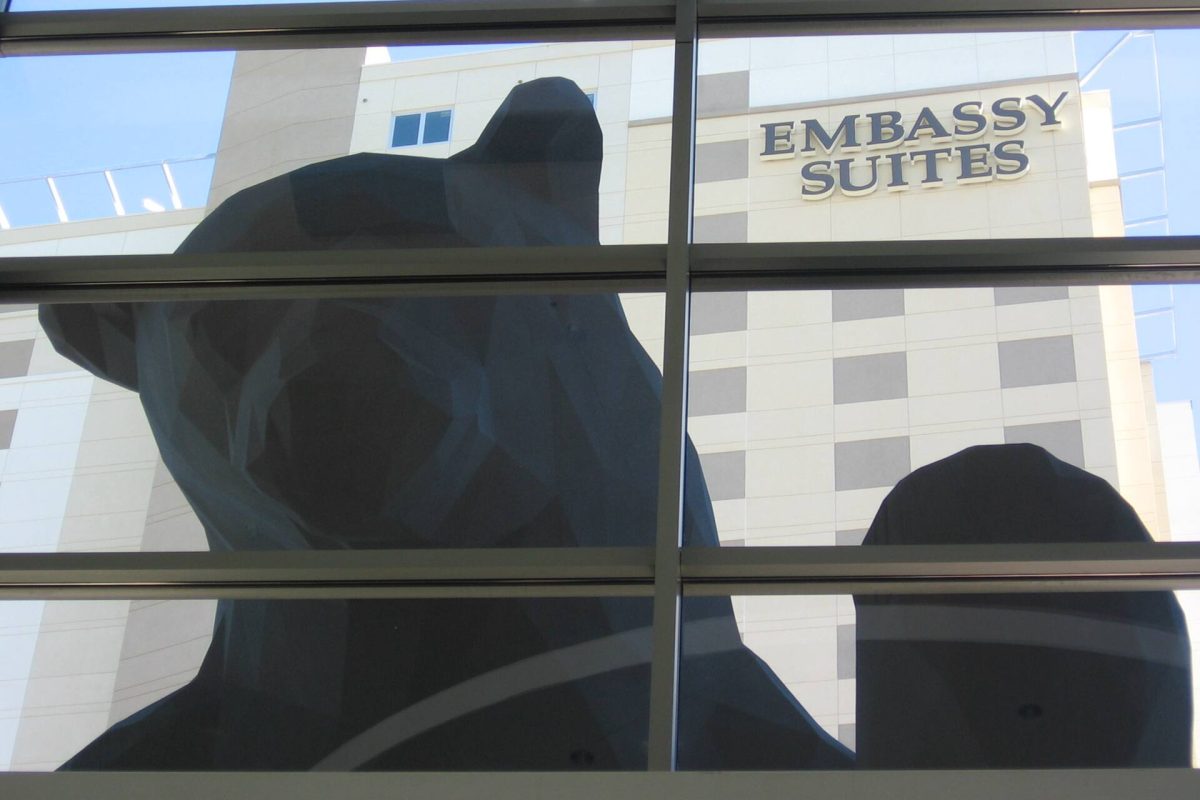
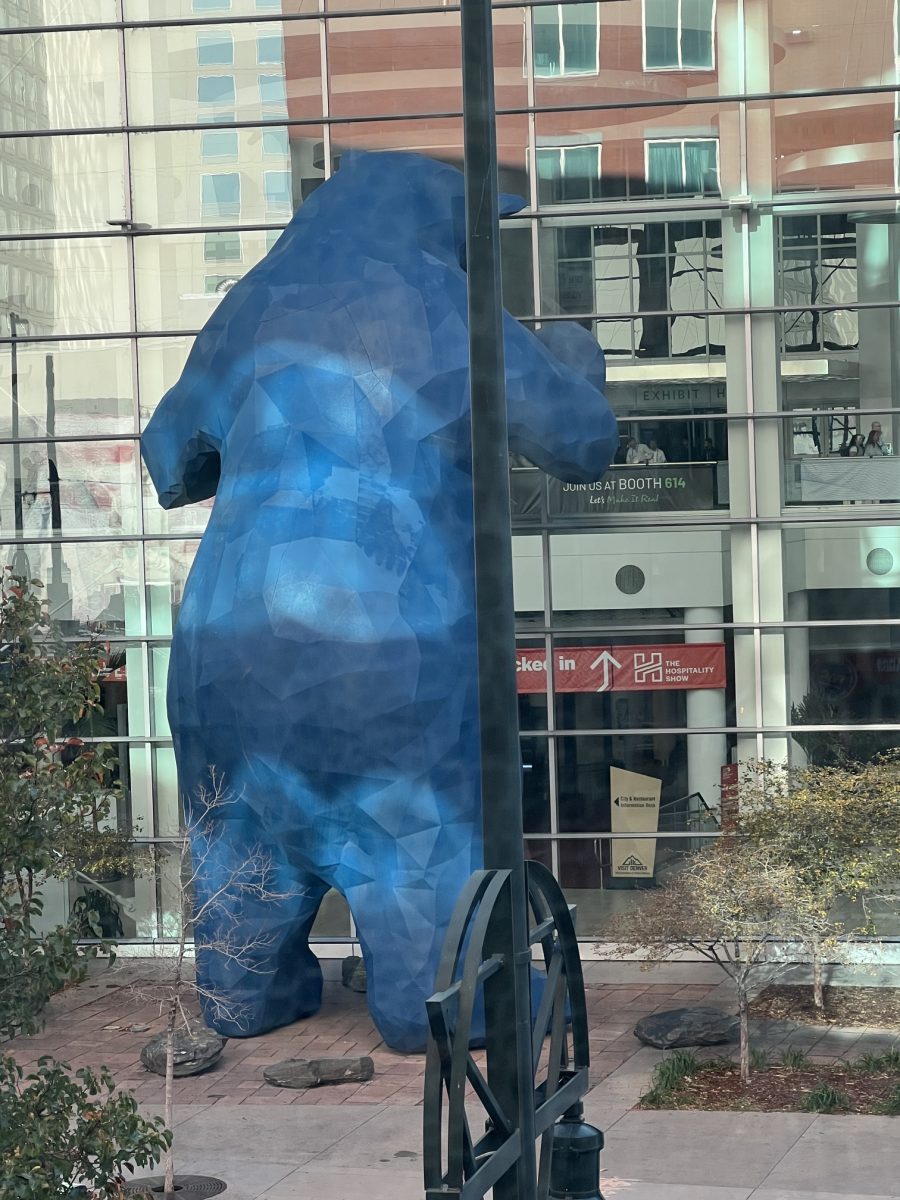
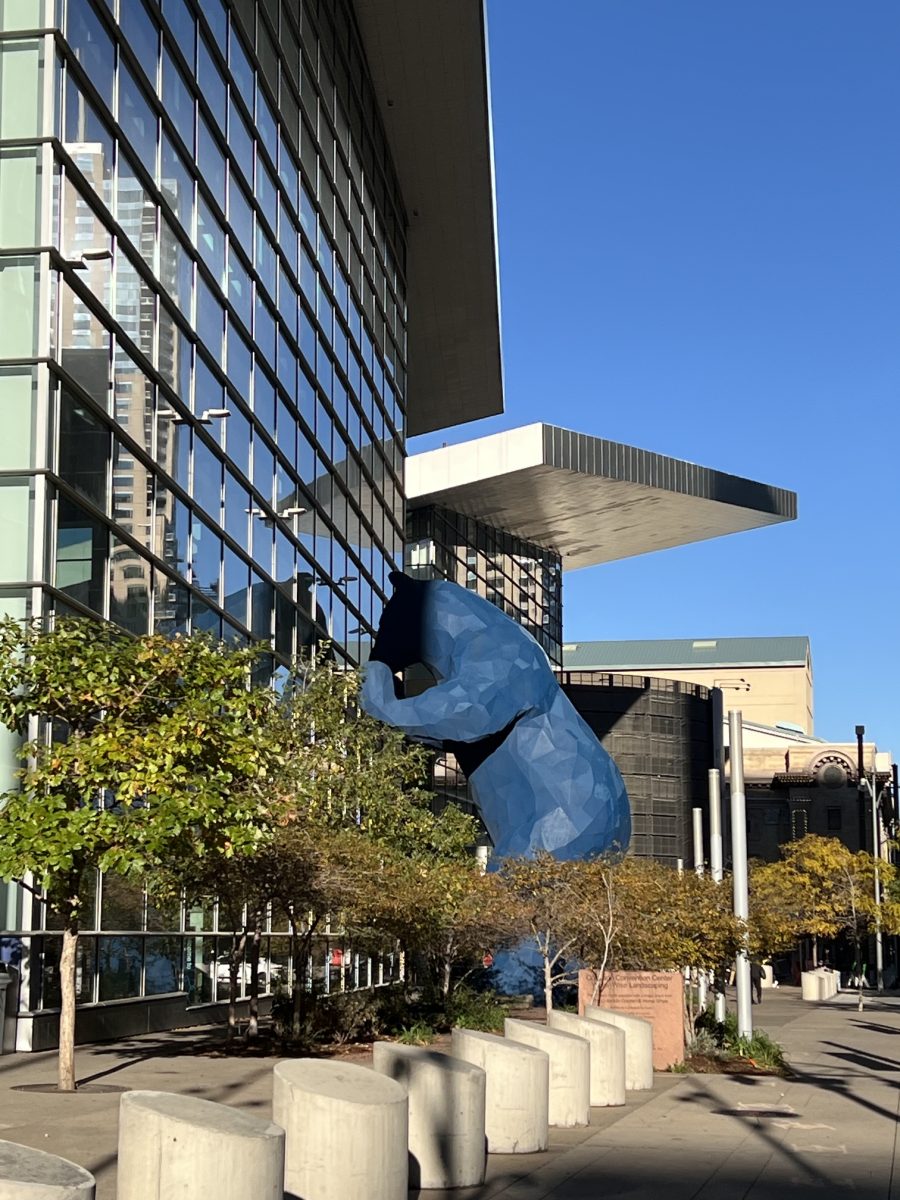
The Big Blue Bear was one of those projects that began peering into the Denver Convention Center 21 years ago. It’s a massive, 40-foot high, 10,000-pound sculpture of an adorable bear made possible with composites, and it’s right across the street from IACMI’s 2026 Members Meeting.
“I have a passion for challenges, for fighting out of a corner,” admits Bill. “We really don’t bid on jobs; they come to us. We say ‘yes’ when others say ‘no’.”
There’s More to the Story Than Meets the Eye
The official name of this project– “I See What You Mean” –was intended to spur dialogue about perspective between art and the public, placing both the bear and spectators in conversation about what they are seeing and sensing.
A great idea, without an implementation plan.
“When the artist, Lawrence Argent, won the bid, he had no idea how to actually make it,” Bill recalls. “So, he came to us, and we were able to use a new technology at the time, laser scanning, to scale up a small model he had 3D-printed.”
Bill and his team used the laser-scanned image to produce CAD files that laid out a collection of 4,000 triangles made of FRP (Fiber Reinforced Polymer) composite. Divided into six sections, they CNC-machined polystyrene foam molds and used a hand wet-layup process for fabrication. Each section was fabricated in California, trucked to Denver on several flatbeds, and assembled onsite.
The reason the bear is blue was somewhat of an accident. For the first miniature prototype, they happened to use a bright blue filament. It fit with Colorado sky blue and quickly became the color for the giant sculpture. What took the longest amount of time was squabbling over how close the bear could get to the window.
Bill says, “The bear had to withstand tornado-strength winds. It needed to be somewhat flexible and couldn’t be touching the glass. The engineers went back and forth for months, arguing whether it could be 12 or 18 inches from the building, until the final deciding factor came from a guy in maintenance washing the windows.”
What Came Next
Other than one fresh coat of paint, the Big Blue Bear hasn’t changed at all and has become a Denver icon.
A testament to composites—durability over time.
The lessons that Bill and his team learned from the Big Blue Bear helped shape the next two decades of projects in infrastructure and construction, industries less apt to take risks with new materials and processes.
“We’re bringing innovation to an industry that is terrified of innovation, and there are reasons for that,” Bill says, “but at some point and time, the scale tips over in favor of an innovative solution.” As a keynote speaker for Members Meeting 2026, Bill will be sharing his advice for navigating conservative industries dominated by concrete, steel and wood and his tips for composite alternatives, particularly in his most recent project, the Lucas Museum of Narrative Art in Los Angeles