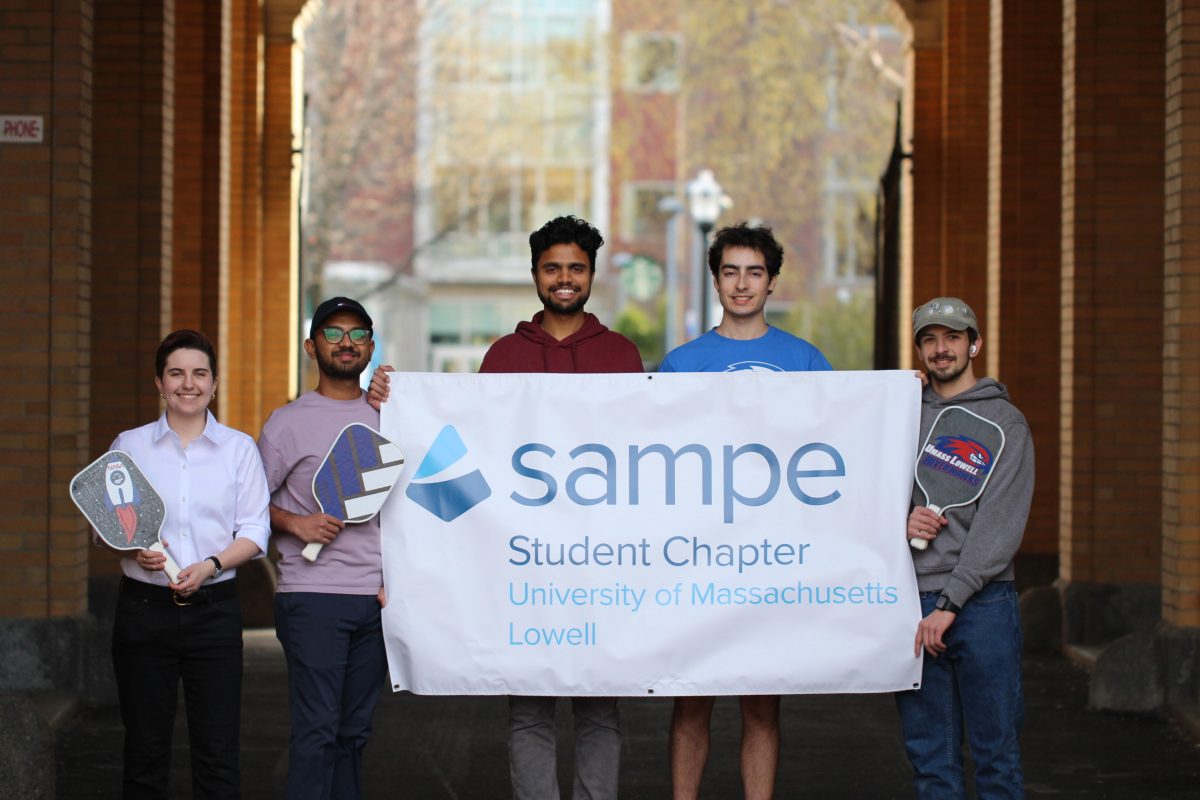
May 26, 2026 — “We said time and time again that we’ve get one shot; nothing can go wrong,” confides Kevin Cloherty. That’s a lot of pressure in the field of engineering, where iteration is everything.
Six graduate students from the University of Massachusetts Lowell, an IACMI member, are huddling around a Go No Go machine. Organizers are using a three-point bend test to observe the amount of force required for a pickleball paddle to show 1/16th of an inch of deflection. They’re hoping all three of the paddles they’ve fabricated for the first competition of its kind at SAMPE (Society for the Advancement of Material and Process Engineering) will meet tight specifications.
Biting fingernails. Looking worried. Holding their breath.
Designing the Perfect Paddle
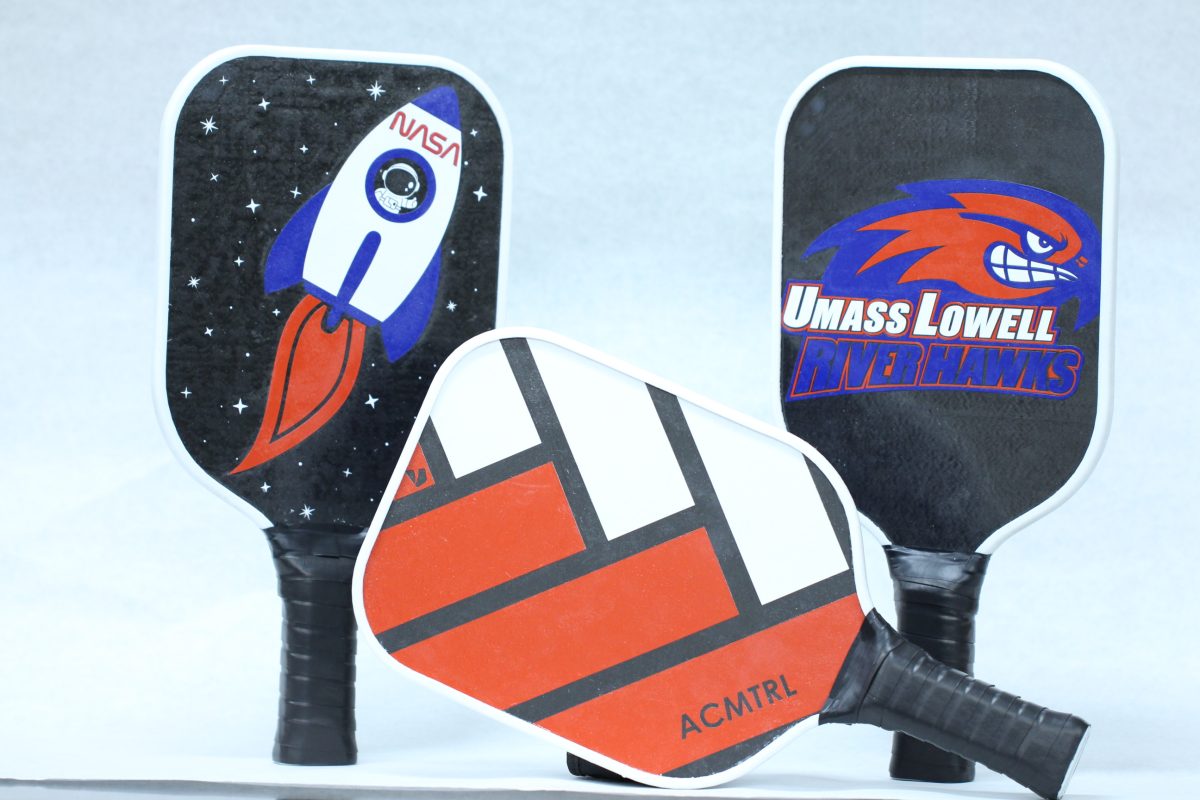
“Our original goal was to design a novel pickleball paddle that minimized mass, increased maneuverability, and optimized the vibrational property,” Kevin explains. “So, when you hit it, you don’t want to feel it in your arm.”
Drupad Kadiyala Bhavani adds, “Also, we wanted a pattern which feels really nice in your hand.”
Their first prototype accomplished that but was way too stiff–eight times the optimal stiffness. With only three days until the conference, they completely redesigned their core structure.
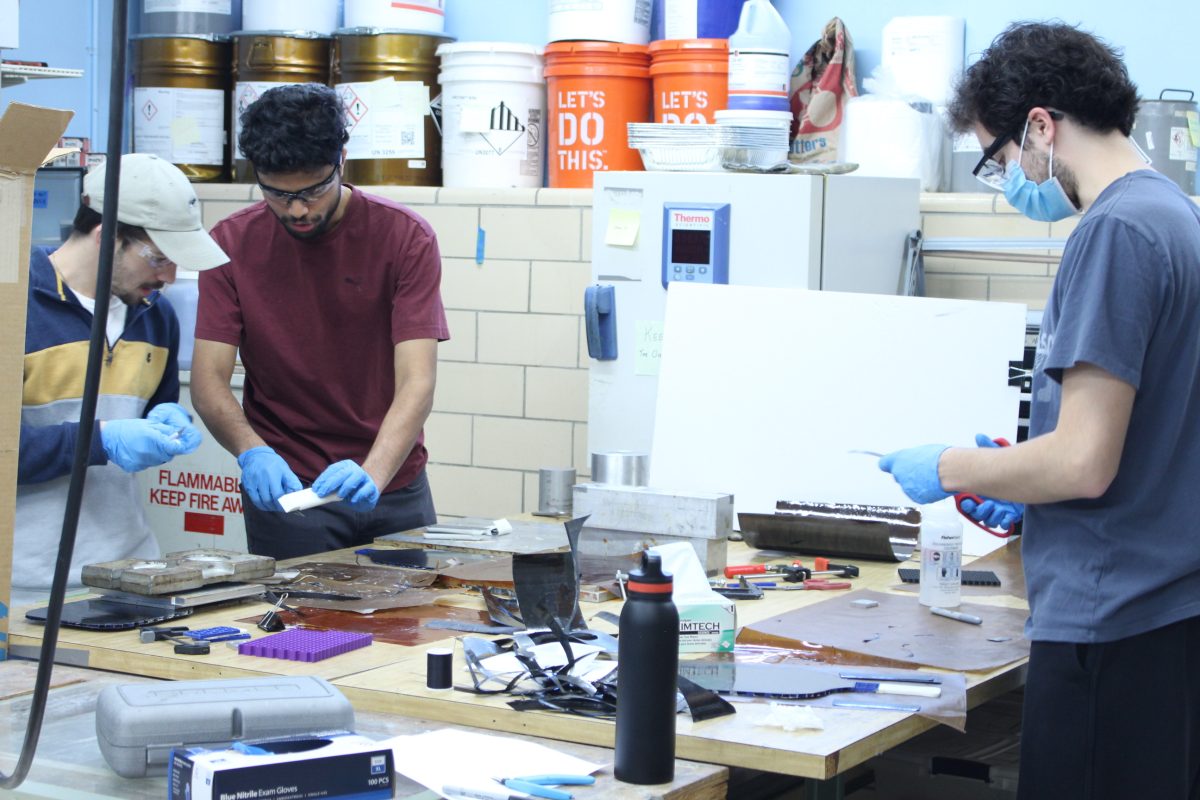
Since the competition was not just can you make a paddle but can you manufacture the same paddle consistently, the team had to pick a design at that point and commit. They spent 20-hour days, speeding the fabrication process along.
“Technically by the time we were on the plane, some parts of the paddle weren’t fully cured yet,” Kevin shares. “And so when the airline made us check our bag and we watched baggage handlers throw a heavy bag on top of ours, I cringed. We flew clear across the country and were worried the entire way.”
But more on their story in a bit.
Learning by Doing
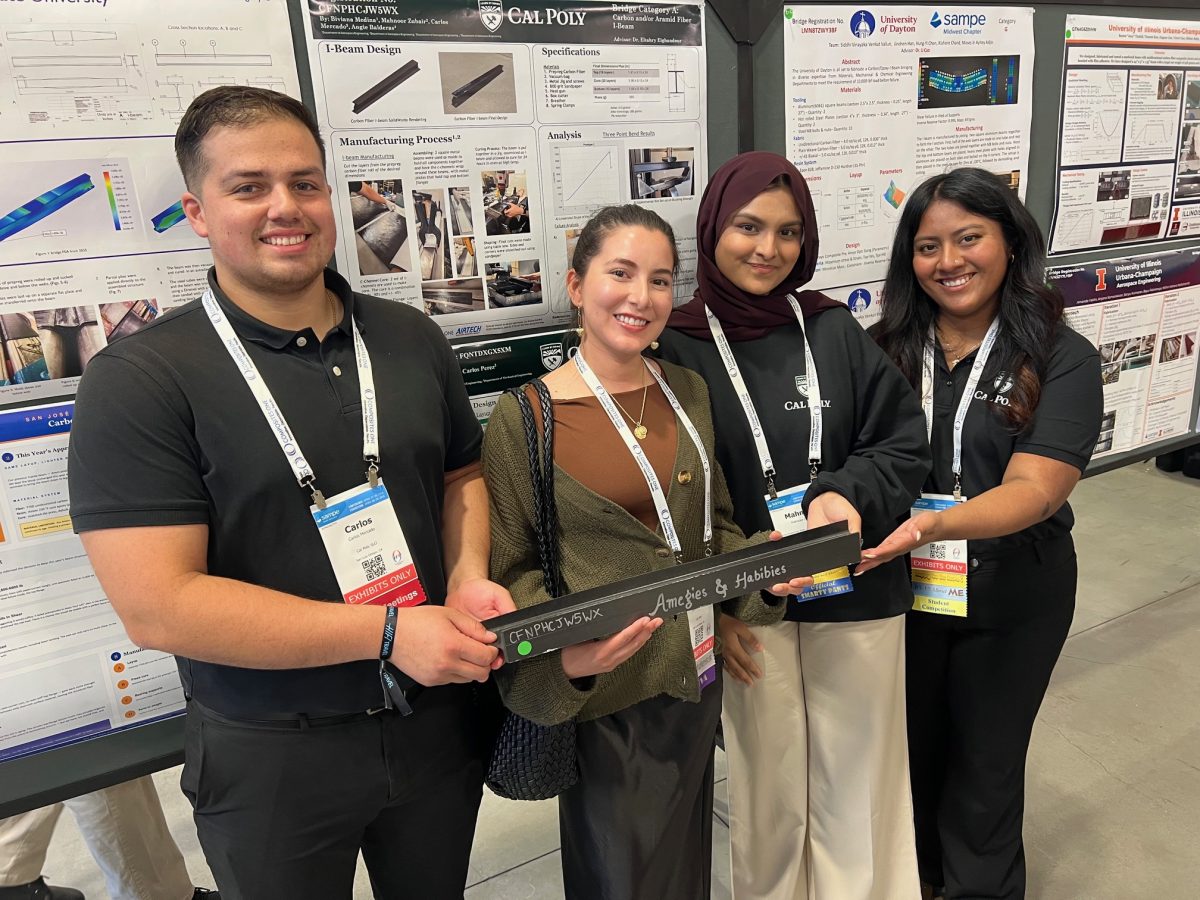
Meanwhile at another IACMI member, Cal Poly San Luis Obispo, four aerospace engineering students were preparing for a different competition at the same conference—simulating bridges. For decades, budding engineers have fabricated tabletop versions with different structures, materials, and processes to see which can hold up best under pressure…literally.
The group had met in class but had never made composites before. Joining the local SAMPE chapter at their school gave them the tools and opportunity to get hands-on learning. They chose to make a carbon fiber I-beam.
“I think theoretically, we have a good understanding because we’ve taken a class in structures,” says junior, Biviana Medina. “But if you don’t manufacture correctly, that theory just goes out the window.”
That’s a lesson their professor, Eltahry Elghandour, aka “Dr. E,” has watched budding engineers experience since 1993, when he first began bringing students to this competition.
“It’s more learning by doing,” he insists. “I don’t care about the theory. It’s the manufacturing technique. They have to figure out how they can reinforce the process. I may see that their idea won’t work, but I never tell them what to do. I want them to think for themselves.”
One of the teammates is a graduating senior, Mahnoor Zubair. She had gotten some hands-on fabricating experience this past summer with Vitriform3D through an IACMI-sponsored internship supported by the Department of Energy.
“It gave me a broader aspect of oh, I can go in different parts of manufacturing,” Mahnoor shares. “It doesn’t matter where you start at your college; it’s ok to pivot.”
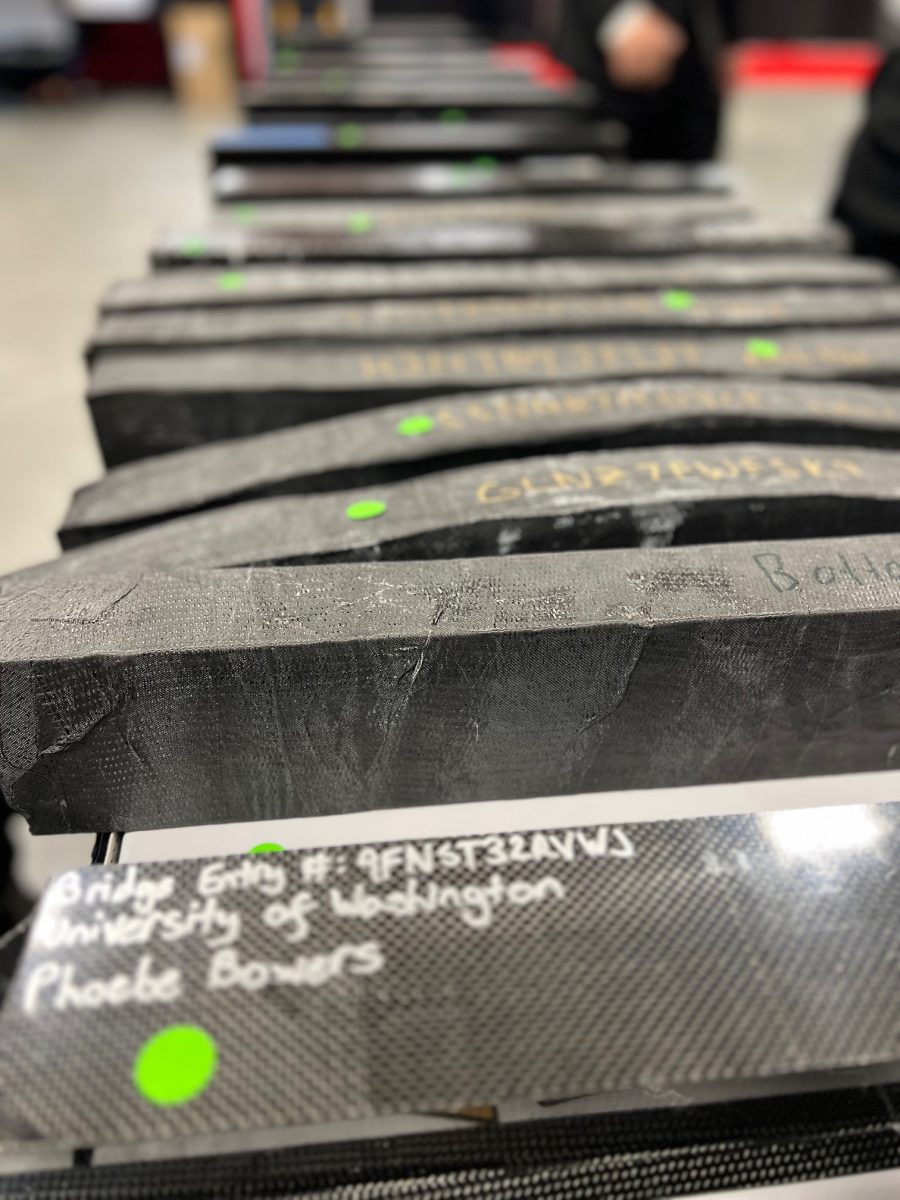
The time has come to test the strength of their bridge. Mahnoor and Biviana carefully place it inside the test box and close the door. Everyone stares at the screen that slowly, slowly creeps up as pressure is added. The line goes up, up, up until a sharp snap causes it to plummet. Despite trying several design iterations to their bridge, this one ultimately fails the stress test.
“The reason our beam failed is because we were missing the whole bottom flange,” shrugs Mahnoor. “The wax paper we used in the jig when it was curing must have affected it. Lesson learned.”
Sustaining a Composites Program
Back at the pickleball paddle testing, the UMass Lowell students watch as the machine tests several areas of the first paddle.
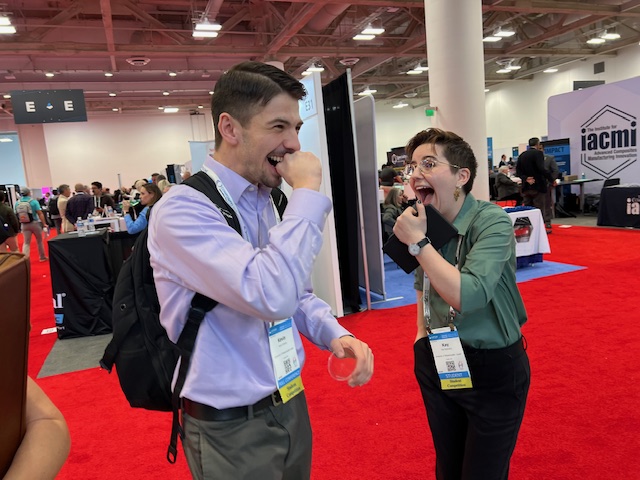
“I’m so stressed; I don’t think I can look,” confesses Kay Wojtowicz.
Since they didn’t have time to test the paddles in the lab, they have no idea how they’ll perform. The first numbers are some of the closest the competition has seen to the desired force between 42lbf and 45lbf. They cheer, jump up and down, but then settle down quickly to watch the results of the other two paddles. Consistency is what will make or break them. The second paddle has slightly higher numbers but still within range. The third paddle is nearly spot on.
More cheering! High fives all around! Smiles that say this was worth the sleepless nights.
“We ended up with a very, very lightweight paddle that when compared to current pickleball paddles that you can buy have similar if not better rebound, about the same performance,” says Kay. “It feels fantastic in hand; swings are so smooth!”
These are students who took a chance in a brand-new challenge with little prior experience. When all the testing is complete, they’ll take home a respectable third place out of 20 entries.
When asked what this means to them, Jagadeesh Reddy responds, “I think this proves that we were supposed to be here, that this was a good investment of our time. The main goal of this was national outreach for UMass Lowell, and we showed it’s worth investing in the extracurriculars of graduate students.”
Anthony Mosto adds it’s more than for their own benefit. This is about sustainability for the school’s composites program. “We had undergraduates coming in watching us manufacture the paddles and they’re like, ‘How do I get involved? I want to come next year.’ We want to plant the seed we never see fully mature, right? And I think this is kind of the jumping off point for us.”
Partnering with SAMPE and supporting our academic members, IACMI is proud to be that springboard for the next generation engineers.