
Advancing the Future of Large-Scale HP-RTM Molding at IACMI’s SuRF
August 5, 2026 — “When people think of composites, they often think about design and manufacturing limitations,” says Jeff Valentage, senior marketing advisor for ExxonMobil™. “With Proxxima™ polyolefin thermoset resin systems, we believe we’ve opened up the design aperture for what you can do with composites while also addressing manufacturing challenges —we’re looking beyond these limitations to enable new and exciting application opportunities.”
That’s a bold statement for someone who’s worked in the mobility industry for almost 40 years. Jeff has worked to bring numerous ExxonMobil solutions to the mobility market segment, focusing on improving material and application performance, lowering weight and advancing manufacturing efficiencies. Now he’s focused on scaling up composite opportunities in the light and commercial vehicles segments.
“What we want to focus on is: how do we help enable the composites industry to really grow?” he adds with enthusiasm.
Enable scalability of composites to meet high volume and demanding automotive applications
Jeff is part of ExxonMobil’s Proxxima team focused on how to expand the capabilities of its polyolefin thermoset resin systems. Designed to provide a step change in performance versus existing solutions, Proxxima systems overcome traditional tradeoffs to deliver lighter-weight materials with a superior balance of strength and toughness.
Key benefits include fast infusion times, compatibility with a range of fibers and additives, and the ability to control curing speeds — from seconds to minutes — to match production and equipment requirements. Perhaps the system’s greatest strength is its adaptability.
To prove it, ExxonMobil teamed up with an automotive supplier to do something that’s never been done before. Together they produced the first commercially demonstrated Proxxima polymer-based, Class A surface quality, light-vehicle application.
The team adapted materials that had been traditionally used for decades in medium and heavy-duty commercial trucks and proved it on a light vehicle. And they did it with existing tooling and systems.
In the automotive industry, where production speed and cost efficiency are critical, that’s huge. It’s not surprising these results caught the attention of an ACMA technical committee, which awarded this project the Combined Strength Award for CAMX 2025.
Winning a top award like this in front of thousands in the industry is a powerful springboard. It gives OEMs who are walking the floor of the Composites and Materials Expo a reason to stop.
Scaling Up Through Automation
Demonstrating that something can be done is one thing. Scaling that process up to automotive production standards is something else entirely, but it’s a challenge many are ready to tackle. That’s why ExxonMobil is investing in equipment at IACMI’s Scale-up Research Facility (SuRF) in a new Detroit, Michigan location. The SuRF will bring OEMs and suppliers together to showcase their capabilities in action.
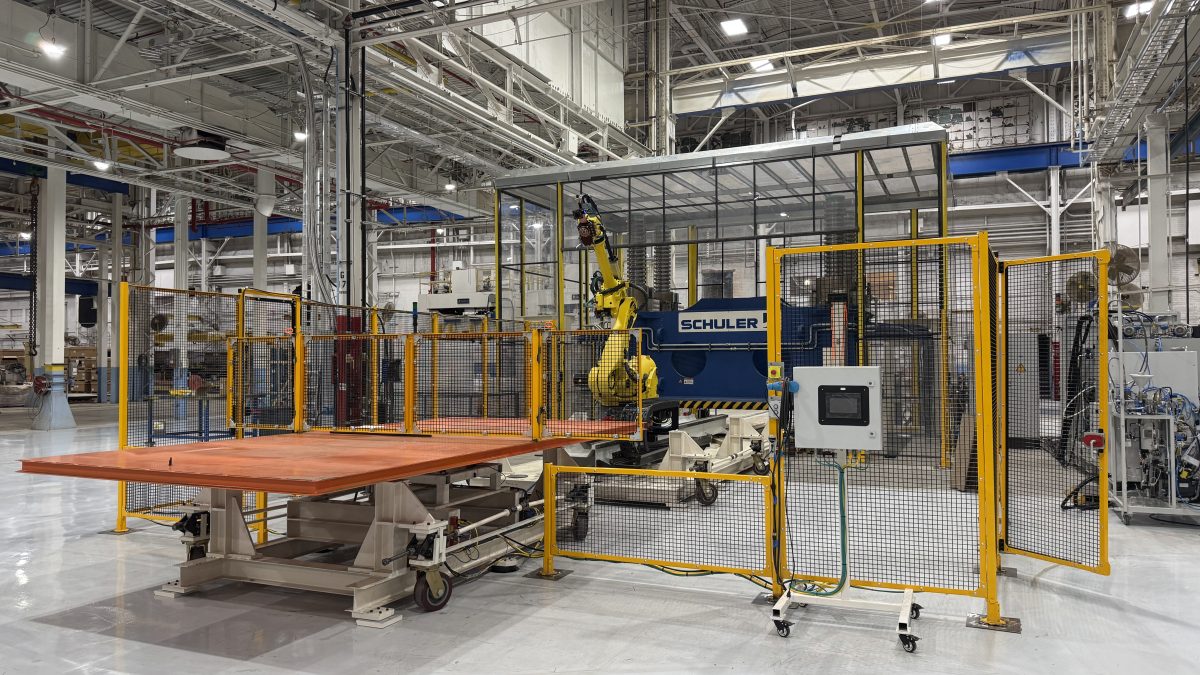
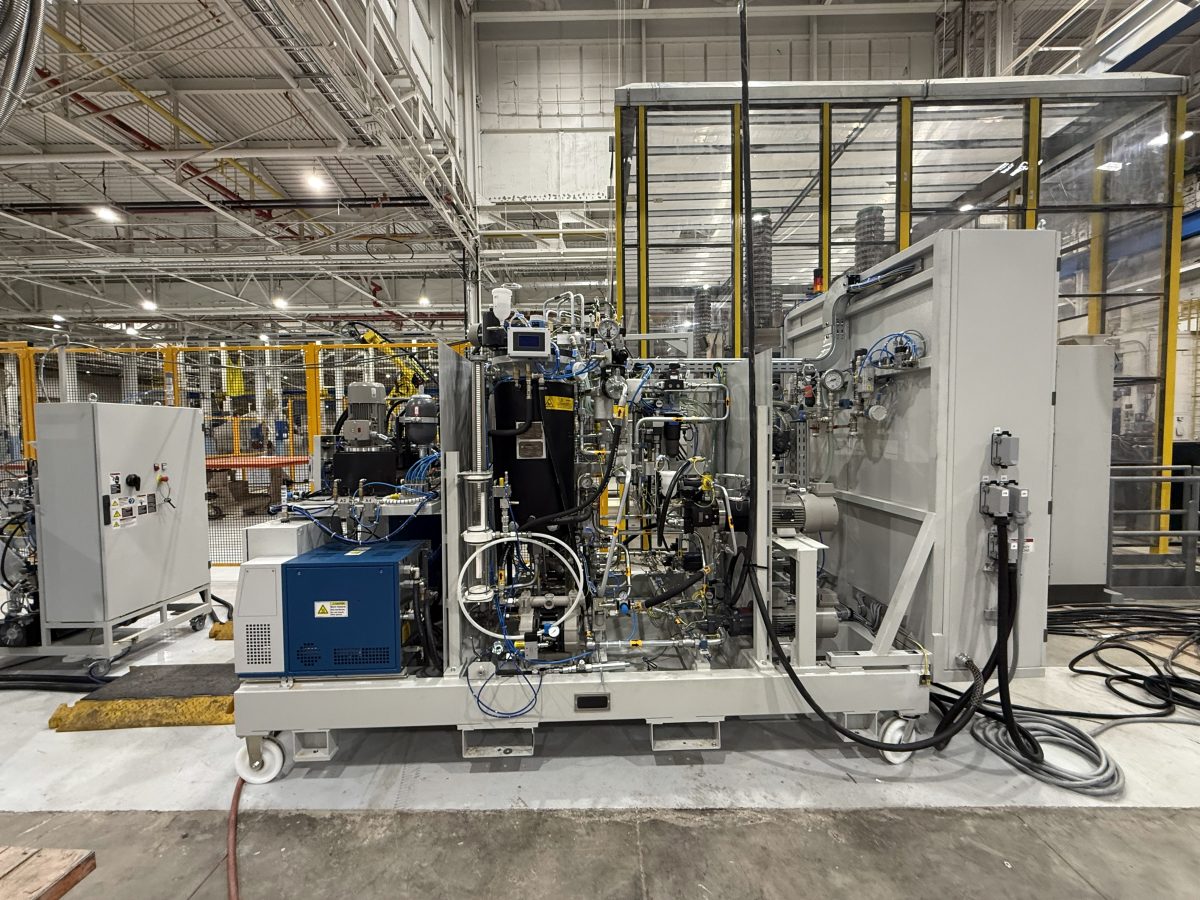
SuRF Director Ray Boeman explains. “We have a really compelling project with ExxonMobil and the Proxxima materials where we are adding not only a new metering system to accommodate a special mix ratio, but also an automation system that will augment our capabilities on our 4,000-ton compression molding press.”
Automating systems is key to scaling production.
Jeff adds, “So instead of producing one part here and there, let’s integrate multifunctional capability into complete composite system solutions. Let’s start eliminating parts on vehicles. How can we take something that has multiple parts, that was traditionally done in steel or aluminum, and consolidate that down to one or two parts, while also improving performance and incorporating other functional benefits? That’s the power of composites and the value for the industry: Reduced complexity, part count, weight and system cost savings.”
One of the biggest challenges to getting that line functional is that it will be working with a 4,000-ton Schuler press that’s been relocated from the previous facility. It’s been a massive undertaking dismantling, hauling to and from storage with seven trucks, and digging a 27x52x19-foot pit of reinforced concrete.
Operational again, the press can showcase fast closing speeds optimized for both thermoset and thermoplastic compression molding. Very few places in the world can consolidate a thermoplastic laminate in less than six seconds!
IACMI’s CCO Jason Gibson says, “The SuRF was designed to function as a national resource for large-scale composite manufacturing. Anchored by the Schuler press, the facility provides true production-scale forming capability, supported by injection molding platforms up to 3,000 tons, thermoplastic overmolding, and water-assisted injection molding for complex geometries. But the real strength of SuRF lies in its integration. By combining our Fill multi-layer tape machine, the Litzler prepreg line, and large-format additive manufacturing with the Titan Atlas system, we’ve created a comprehensive environment for advancing both thermoplastic and thermoset composite technologies.”
Eye on the Future, Nod to the Past
While focused on the future of advanced manufacturing, IACMI’s new Detroit location also carries significant industrial history as part of the historic Mount Elliott Tool and Die (METD) plant.
Walter O. Briggs, Sr., the largest independent autobody manufacturer in the world at the time, built the facility in 1938, the same year he, as owner of the Detroit Tigers, re-opened a renovated and expanded Briggs Stadium (later renamed Tiger Stadium). The METD was set up for automotive sheet molding and metal stamping. At the onset of World War II, Briggs suspended automotive manufacturing in all his plants and shifted to wartime production of defense components as Detroit became known as the “Arsenal of Democracy.” After Briggs’ death, the facility was purchased by Chrysler in 1956. The plant transitioned from general stamping operations to specialized die production by 1983. In an era of increasing global competition, this helped Chrysler minimize lead times and costs and reduce their reliance on external suppliers. Although Fiat Chrysler Automobiles shuttered the METD building in 2018, that clearly wasn’t the end of its story.
When the SuRF team began searching for a new home for the SuRF – originally launched in 2017 by IACMI – The Composites Institute® and the U.S. Department of Energy (DOE) — they recognized the potential in the 680,000 square foot METD that had “great bones and impressive capabilities” like 50-ton cranes. Equally important and impressive was that the new owners shared a vision about creating an advanced manufacturing ecosystem with technology and training focus.
Today, the SuRF occupies approximately 80,000 square feet within the complex, doubling its footprint while embedding the institute in a rapidly expanding manufacturing ecosystem. After a German automotive Tier 1 established its North American headquarters for metal stamping and assembly in 2024, other partners followed. Some of the specialties include automation, vehicle module assembly, surplus equipment sales, manufacturing equipment service and repair, tool component manufacturing, large CNC machining and fabrication, and most recently, large-scale metal additive manufacturing.
The growth of the SuRF platform has been supported by long-standing collaboration between IACMI, DOE, and the Michigan Economic Development Corporation (MEDC), whose investments in advanced manufacturing and regional innovation have helped position Michigan as a national hub for next-generation composite technologies. Their support has enabled IACMI to expand its scale-up infrastructure while creating opportunities for companies to test and validate production-ready manufacturing processes.
From large-scale CNC machining capabilities to space for workforce training, Ray and his team are excited about this next chapter.
“Between the direct interaction and customer visibility, it’s the kind of cross-fertilization that will help us accelerate quickly. It’s not just the equipment; it’s the expertise. These partners have been working in their respective areas for decades. That combination with the finished application creates a unique opportunity.”
Equipment + Expertise = Opportunity
Learn more about the SuRF or reach out to us through expertise@iacmi.org.


